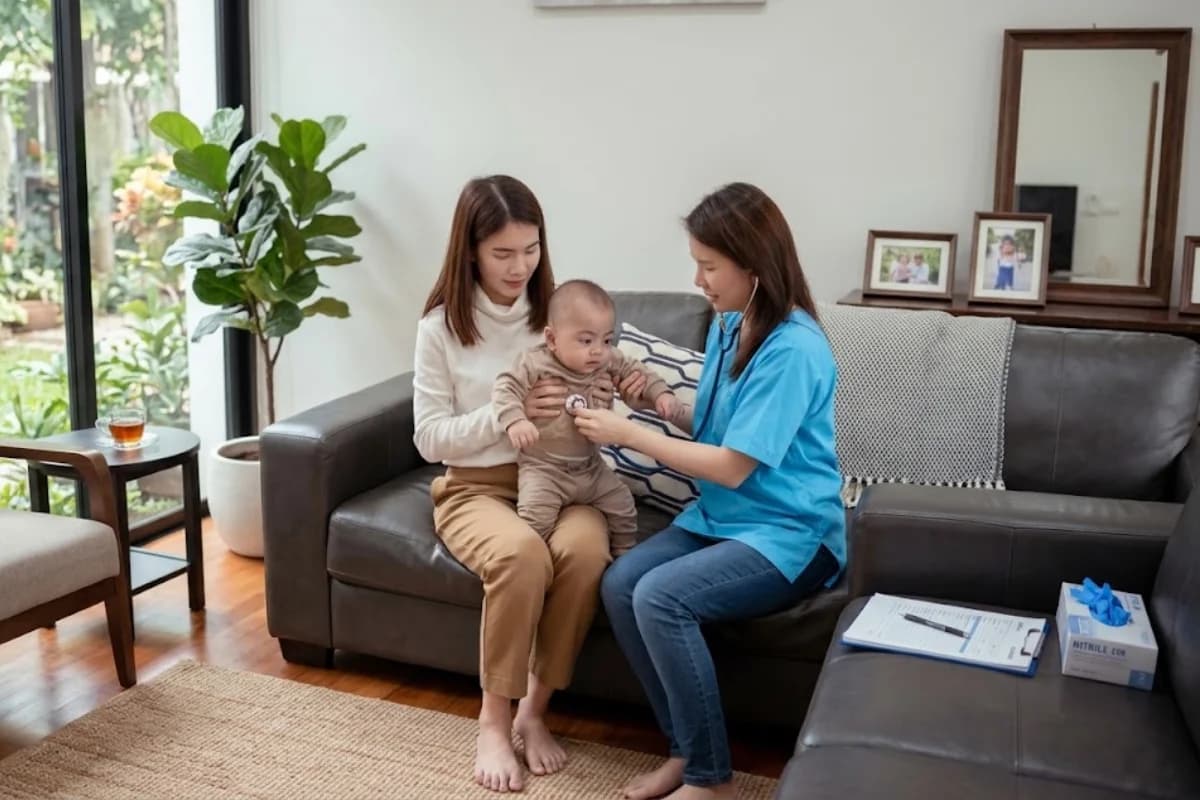
Understanding the newborn sleep schedule of a newborn is a challenge which is especially true in the first few weeks. Also at this early stage of a baby’s life sleep patterns are not a predictable thing because babies require very frequent feeds and do not yet have a regular day and night cycle.
Most at birth babies sleep for 16 to 17 hours in a day which may vary individual to individual. What is important is that parents pay attention to feeding, safe sleep and their baby’s signals instead of a set schedule. Also if you require a newborn care guide and professional in home newborn care in Dubai do we wish to help you to better understand your baby’s which are changing.
1. How Much Sleep Does a Newborn Need?
At birth, babies usually sleep in short intervals throughout the day and night. Some may sleep around 8 hours in total, while others may sleep up to 18 hours. Frequent waking is normal because newborns have small stomachs and need regular feeding. Understanding who needs nursing care at home can also help parents recognise when professional support may be useful during the newborn stage.
There is not a single schedule that works for all babies. Instead of expecting long stretches of sleep, pay attention to your baby’s feeding needs, alertness and sleep cues.
2. Understanding Newborn Sleep Patterns
New at birth sleep patterns are different from that of adults. Babies do not sleep in long stretches and may sleep at any time of the day or night.
It also is a common thing for newborns to have no idea of day and night. To help them out:
-
Keep the curtains open and during the day perform normal household tasks.
-
Use low light and a soft voice for night feeds.
-
Keep nighttime interactions calm and brief.
-
When your baby is ready.
As babies grow they develop into more predictable patterns.
3. Newborn Sleep Chart by Age
Here is a general guide, not a strict timetable:
Age
Typical sleep pattern
0–4 weeks
Frequent short sleep periods, day and night
1–2 months
Sleep remains irregular, with frequent feeding-related waking
2–3 months
Some babies begin developing longer nighttime sleep periods
3–4 months
Sleep patterns may become more organised, although night waking remains normal
A baby’s sleep schedule by month is a reflection of their development, feeding, and individual needs. Use the newborn sleep chart as a general guide rather than a set target your baby has to meet.
4. Newborn Wake Windows and Sleep Cues
New at which a baby is awake between sleep periods are what we call newborn wake windows. These periods tend to be short and also may vary from one baby to another.
Watch for signs that your baby is ready to sleep, such as yawning, looking away, becoming fussy or rubbing their eyes. These cues may also indicate overstimulation, so gently help your baby settle. For additional guidance, read our doctor on call at night in Dubai guide to understand when professional medical support may be needed.
Do not force a new born into a schedule. Feed, comfort and rest are of priority.
5. Should You Wake a Sleeping Newborn to Feed?
Whether at what point you should wake a sleeping newborn is based on age, weight gain, feeding effectiveness and medical advice. Some newborns in particular those which have not yet regained their birth weight or have feeding issues may require scheduled feeds.
Ask your pediatrician how your baby’s feeding schedule should play out and if you should wake them for feedings. Also do not assume that a long stretch of sleep is right for all newborns.
6. Creating a Safe Sleep Environment in Dubai
Dubai’s mild climate is a factor in which we pay attention to indoor comfort. We put forth that which you put in your baby’s room should be cool and well ventilated, also that which you dress your baby in should be appropriate light weight sleepwear and which which you layer is a no go. The UAE’s child safety guidelines report a usual sleep room temp of 20-22° C but your baby’s wear also plays a role.
For safe sleep:
-
Always put your baby to sleep on their back.
-
Use a separate flat sleep surface.
-
Do not put pillows, toys, loose blankets and other soft items in the sleep area.
-
For the first six months. Also have your baby in the same room.
-
Avoid overheating and smoke exposure.
These measures help to reduce the risk of sleep related infant deaths.
7. When Should Parents Seek Professional Support?
If your baby is slow to wake, has poor feeding, is producing fewer wet nappies or is breathing unusually, see a doctor as soon as you can. Also if your baby less than 3 months of age has a temperature of 38°C or higher take him in for an urgent medical check.
Parents that require extra support may look into pediatric care at home or ask out about the newborn nurse Dubai. In Dubai we have qualified baby nurses at home which may include routine newborn care, also we have the pediatric home visit in Dubai which we may use when a medical issue comes up.
Frequently Asked Questions
How many hours should a newborn sleep in 24 hours?
Many at birth sleep for 16 to 17 hours a day although the normal range is to great a degree. Sleep at this stage is in short intervals.
Why does my newborn sleep all day and stay awake at night?
New at birth babies do not have a set day and night rhythm. We see that by exposing them to light in the day and normal activity at night we may help to create that difference.
How long can a newborn sleep without feeding?
There is no set safe interval. Feeding frequency is based on age, weight gain, health and whether the baby is breast or formula fed. Follow your pediatrician’s instructions.
When do babies start sleeping through the night?
Some babies start to sleep through for longer periods at 3 to 6 months in which case it is great, but we see great variation in development which means that some may not. Also night wakings may still happen well past this stage.
What room temperature is best for a newborn to sleep in Dubai?
Keep the room at a comfortable cool temperature and avoid over heating. In the UAE we are told that a sleep room should be between 20-22°C, also dress your baby appropriately and watch for signs of comfort.